


Remembering Cathie Lloyd, 1946-2026
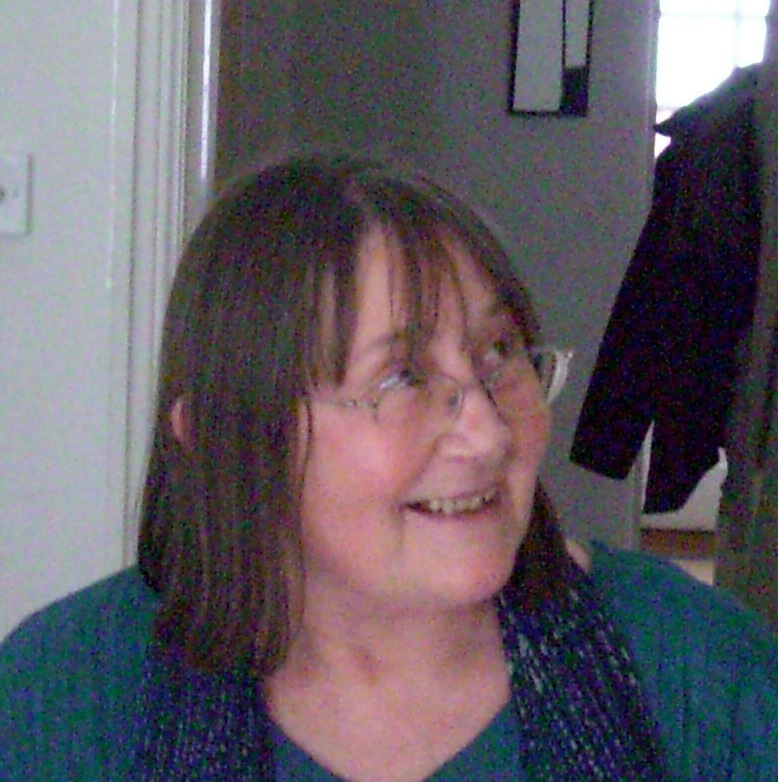
Progressive politics in Scotland is left weaker by the loss of Cathie Lloyd, who died earlier this month at home in Edinburgh.
Amongst her other commitments, Cathie was an active member of Democratic Left Scotland, contributing many considered and thoughtful pieces to this website, such as the one linked here.
We are privileged to publish this personal in memoriam, written by her partner, Paddy.
Cathie was born near Swindon in 1946. Her father was a primary school teacher from a family of South Wales miners. Her mother was from a Wiltshire farming background. This contrast provided the setting for a life shaped by a quest for freedom from most forms of authority, which found expression in her political activism, her academic research, and her painting.
Two events marked an early political awakening: taking part in a Liberal party campaign against the local impact of the Beeching cuts, and the sheer terror induced by the roar of bombers at Lyneham during the Cuban missile crisis, from which point she became a lifelong opponent of nuclear weapons.
Having moved to London in the 1970s to teach in FE, she became involved in the Campaign Against Racism and Fascism and with the Institute for Race Relations. She eventually left teaching for a job with Westminster Trades Council monitoring the Metropolitan Police (My job is to go on demos, she would say). This was followed by a varied career which included working at the Police Unit at the GLC and its successor body; the Commission for Racial Equality, where she became Head of Research; and academic jobs at the Universities of Warwick and Oxford.
Campaigning against racism, in its multiple forms, was just one of several threads linking her personal, political, and professional lives. Francophile from an early age – having taught herself French by listening to Salut Les Copains on the radio – and an early supporter of the EEC at a time when the British Left was near-universally opposed to it, she sought to build links between London and Paris trade unionists, organising mutual visits from the Paris CGT and SERTUC (Southeast Region TUC). She soon made contact with, and got involved in, the French antiracist movement, notably MRAP (Mouvement contre le Racisme et pour l’Amitié entre les Peuples). Typically, her involvement was immersive, to the point of being elected Vice-President of the MRAP. Some of her research was published in her monograph Discourses of Antiracism in France, in which she argued that antiracism is indissociable from a wider focus on a democratic, progressive transformation of society. The corollary to this proposition, of urgent relevance today in both France and the UK, is that any temptation by progressive political parties to pander to racism will be the undoing of their wider progressive project, and will thus call their very survival into question.
Her work with the French antiracist movement kindled her interest in Algerian politics, over issues relating to anti-Algerian racism, such as the sidelining of the massacre by riot police of dozens of defenceless Algerians on the streets of Paris on 17 October 1961, in the closing stages of the Algerian war of independence. With a team of Algerian women researchers, she conducted fieldwork on women’s grassroots opposition to the FIS (Front Islamique du Salut) during the civil conflict which tore Algeria apart for over a decade. As always, her commitment went well beyond the purely academic. In December 2007, car bombs claimed by al-Quaeda in the Islamic Maghreb killed 31 people at the United Nations building in Algiers. A few days later an international sociology conference was due to open in Algiers: all the European participants panicked, cancelled and stayed away. All but one: Cathie, who received a standing ovation in appreciation of her solidarity from the remaining Arab delegates.
Having retired, Cathie moved to Edinburgh in 2009. Scottish politics was uncharted territory for her, but she was rapidly won over to the cause of Scottish independence owing to its emphasis on inclusive civic nationalism, its support for refugees, and its rejection of the parochial anti-EU discourse emanating from England in a rising clamour of national-chauvinism. Restricted by rheumatoid arthritis, she returned to another lifelong passion: painting. She completed a Fine Arts degree, and developed new techniques for painting using an iPad. This was an anti-capitalist form of art, she argued, since it eliminates the notion of the unique original, cannot easily be monetised and thus subverts the art market, while allowing immediate sharing of artworks at near-zero cost across continents. Her art was imbued by environmental themes, notably the survival of the Atlantic rainforest on Scotland’s West coast. This dovetailed with her role as Environment Officer for her local SNP branch, and with the regular contributions she made on these topics to Democratic Left Scotland.
Cathie’s last words were open my eyes, a final act of resistance against the coma into which she was sinking and from which she would not emerge. She lived her life with her eyes wide open, and leaves her daughter Beckie, grandson Dylan, and partner Paddy to sustain her gaze.
Published 8 June 2026


